Credential Rotation at Scale: When Automated Secrets Management Becomes a Distributed System Hazard
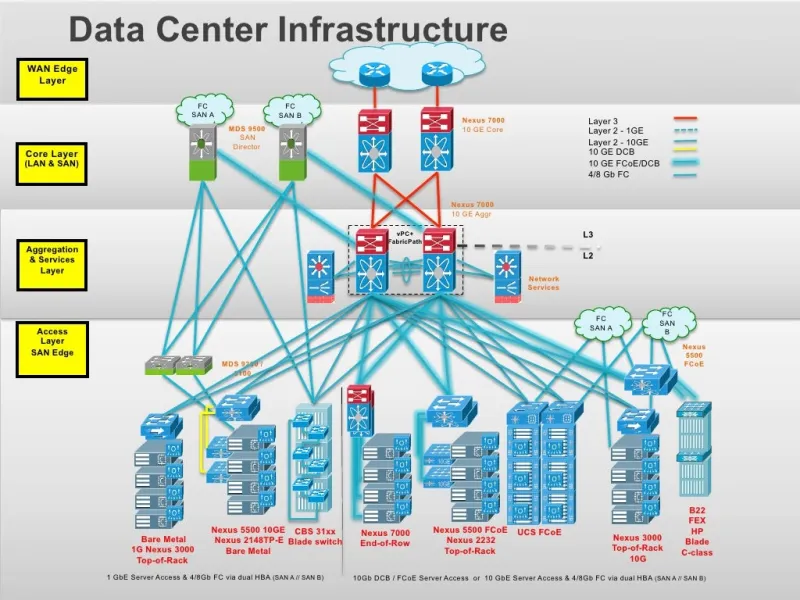
Photo: server security credential management data center infrastructure, via image.slidesharecdn.com
Automatic secrets rotation sits near the top of nearly every security hardening checklist. Rotate credentials frequently, the guidance says, and you reduce the blast radius of a compromise. That logic is sound in isolation. The problem is that distributed systems do not operate in isolation, and the moment a credential changes, every component that depends on it must be informed, updated, and validated — often within a window of seconds before something breaks.
Most engineering teams implement rotation tooling without fully modeling the propagation graph. They configure HashiCorp Vault, AWS Secrets Manager, or a comparable platform, set a rotation schedule, and consider the work complete. What they have actually done is introduce a new class of time-sensitive coordination problem into a system that was never designed around it.
The Propagation Delay Problem Nobody Accounts For
When a secret rotates, the new value must reach every consumer before the old value is invalidated. In a monolithic application, that window is manageable. In a distributed architecture — where microservices, background workers, cron jobs, and edge functions each hold their own in-memory credential reference — the window becomes a race condition.
Consider a typical scenario: a database password rotates at 2:00 AM on a Tuesday. The rotation completes in under two seconds. But a long-running batch job loaded that password into memory at 1:58 AM. It will continue using the cached credential for the duration of its execution. Depending on your connection pool configuration, that job may not attempt a reconnect for another forty-five minutes. When it does, authentication fails. The job retries. The retry floods the connection pool. Downstream services begin timing out.
This is not a hypothetical edge case. It is a reproducible failure mode that appears consistently in architectures where rotation schedules were designed by security teams without direct input from the engineers who built the services those credentials protect.
Load Balancers and Cache Layers Amplify the Risk
Deploy a load balancer in front of a service that is mid-rotation and you introduce another layer of unpredictability. Individual application instances may be at different points in their secret refresh cycle. Instance A has the new credential. Instance B is still operating with the old one. Requests routed to Instance B begin failing. Health checks may not catch this immediately, particularly if the failure manifests as intermittent authentication errors rather than a clean 500 response.
Cache layers compound the problem further. If your application caches authenticated sessions or connection handles, those objects may persist well past the point at which the underlying credential was rotated. Redis, Memcached, and application-level caches do not inherently understand the concept of credential validity windows. They hold what they were given until the TTL expires or the entry is explicitly invalidated. Without a deliberate cache invalidation strategy tied to the rotation event, you are effectively running two authentication realities simultaneously.
How Deployment Pipelines Interact With Rotation Events
CI/CD pipelines introduce a third dimension of complexity. Many pipelines pull secrets at build time or inject them as environment variables during deployment. If a rotation event occurs between the time a deployment artifact is built and the time it is promoted to production, the artifact may carry a credential that is already expired by the time it reaches a live environment.
Blue-green deployments are particularly vulnerable here. The green environment spins up, pulls the current secret, passes smoke tests, and begins receiving traffic. If the rotation schedule fires during the cutover window, the blue environment — still handling residual traffic — may be operating with a credential that has just been invalidated. The result is a partial outage that is difficult to diagnose because the infrastructure looks healthy from the outside.
Canary deployments face a similar challenge. A canary instance running with a newly rotated secret may behave differently from the stable fleet not because of a code change, but because of a credential state discrepancy. Without explicit logging around secret refresh events, this discrepancy is nearly invisible in standard observability tooling.
Designing a Rotation Strategy That Accounts for Reality
A rotation strategy that actually works in production must be built around four principles: overlap, observability, coordination, and rollback.
Overlap means maintaining a validity window during which both the old and new credentials are accepted. Most mature secrets management platforms support this natively. The overlap window should be sized based on the longest observed secret refresh interval across all consumers, with a safety margin applied. Ninety seconds is rarely sufficient. Fifteen minutes is often more realistic in complex environments.
Observability means instrumenting every secret consumption point to emit telemetry when a credential is loaded, refreshed, or rejected. Without this data, you are operating blind during rotation events. Authentication failure rates should be tracked as a dedicated signal, not buried inside generic error rate dashboards.
Coordination means that rotation events should be treated as deployable changes, not background maintenance tasks. Triggering a rotation should follow the same change management discipline as a code deployment. That includes scheduling rotations during low-traffic windows, notifying on-call engineers, and having a defined rollback procedure documented before the rotation begins.
Rollback is the most neglected element. Teams spend considerable effort designing forward rotation paths and almost no effort designing reverse ones. What happens when a rotation triggers an authentication cascade and the on-call engineer needs to revert to the previous credential within five minutes? If the answer involves manually navigating a secrets management console under pressure, the rollback plan is not a plan — it is a hope.
Build rotation rollback into your runbooks as a first-class procedure. Test it in staging. Time it. The rotation tooling you use should support previous-version retrieval natively; if it does not, that is a platform selection criterion worth reconsidering.
The Organizational Gap Behind the Technical Problem
Most credential rotation failures are not purely technical. They are the result of a structural gap between security engineering, which owns the rotation policy, and platform engineering, which owns the systems affected by it. When these teams do not share a common model of the propagation graph, rotation schedules are set based on compliance requirements rather than operational realities.
Bridging that gap requires more than a shared Slack channel. It requires joint ownership of the rotation runbook, shared access to the authentication failure dashboards, and a formal process for modeling the impact of a rotation event before it is scheduled. Threat modeling for rotation failures is not a common practice today, but it should be.
Closing Perspective
Automated credential rotation is not optional in modern infrastructure. The security case for it is legitimate and well-established. But automation without operational modeling is not a solution — it is a deferred incident. The teams that navigate secrets rotation without cascading failures are not the ones with the most sophisticated tooling. They are the ones that treated rotation as a distributed systems coordination problem from the beginning, and designed their implementation accordingly.