IaC Drift Detection Is Not a Strategy: Closing the Gap Between Alerts and Action
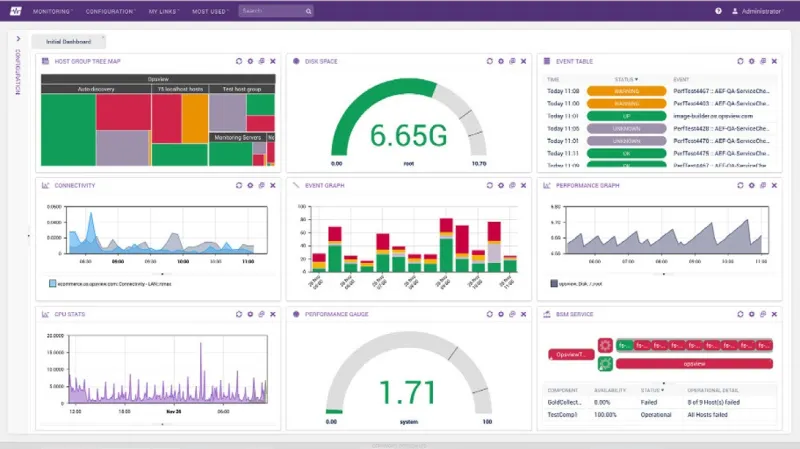
Photo: infrastructure code monitoring dashboard alert system, via www.itrsgroup.com
There is a particular kind of false confidence that settles into an organization once its Infrastructure-as-Code tooling is in place. The pipelines run, the state files are committed, and somewhere in a Slack channel or a monitoring dashboard, drift alerts are quietly accumulating — largely unread, rarely actioned, and increasingly normalized as background noise. This is not a tooling failure. It is an operational failure, and it is far more common than most teams are willing to acknowledge.
Drift detection, in principle, is one of the most valuable controls available to infrastructure teams. When the actual state of a cloud environment diverges from its declared configuration, that gap represents risk: unreviewed changes, potential misconfigurations, shadow infrastructure, or the quiet accumulation of manual interventions that never made it back into source control. But detecting drift and responding to drift are two entirely different disciplines, and the industry has done a poor job of treating them as such.
The Detection Illusion
Consider a typical mid-sized engineering organization running Terraform across several AWS accounts. The team has invested real effort into wiring up a drift detection workflow — perhaps using terraform plan outputs in CI, or a dedicated tool such as Driftctl or Terraform Cloud's drift detection feature. Reports are generated on a schedule. Findings are logged. And then, in the absence of a clear ownership model or escalation path, those findings age out of relevance.
This pattern emerges for several interconnected reasons. First, drift detection outputs are often verbose and poorly prioritized. A report that surfaces forty-three resources with minor tag inconsistencies alongside two security group rules that were manually added two weeks ago is not useful as-is — it requires triage, and triage requires time and context that on-call engineers rarely have. Second, many teams lack a defined policy for what constitutes acceptable drift. Without that baseline, every finding is ambiguous, and ambiguous findings get deferred indefinitely.
Third — and perhaps most importantly — drift remediation carries real risk in production environments. Reconciling state by re-applying Terraform against a live environment is not a casual operation. Teams that have been burned by unintended destructive changes during reconciliation learn quickly to treat drift findings with extreme caution, which often translates into learned inaction.
Organizational Dynamics That Compound the Problem
Beyond the technical friction, there are structural factors that make drift detection difficult to operationalize. In many organizations, the team responsible for maintaining IaC tooling is not the same team making day-to-day infrastructure changes. Platform or SRE teams own the tooling; application or product teams own the resources. When drift is detected on a resource owned by a product team, the platform team has no authority to remediate it, and the product team has no tooling context to understand the finding.
This ownership ambiguity is compounded by the absence of drift findings in standard incident or ticket workflows. Unlike a failing health check or a latency spike, a drift alert does not map naturally to existing operational processes. It does not page anyone. It does not block a deployment. It does not appear in a weekly reliability review unless someone has specifically designed it to do so. As a result, it exists in a kind of operational limbo — technically visible, practically invisible.
What a Functional Drift Response Framework Looks Like
Building a drift detection practice that actually produces outcomes requires addressing process and ownership before optimizing tooling. The following framework has proven effective across a range of team sizes and infrastructure complexity levels.
Establish a drift severity taxonomy. Not all drift is equal. A manually added IAM policy attachment is categorically different from a tag inconsistency on a non-production S3 bucket. Define at least three tiers: critical drift (security-relevant or compliance-impacting changes), operational drift (configuration changes that affect system behavior), and cosmetic drift (metadata or labeling inconsistencies). Each tier should have a defined response SLA and an explicit owner.
Integrate drift findings into existing ticketing workflows. Drift alerts that live exclusively in a dedicated Slack channel or a standalone dashboard will be ignored. Pipe critical and operational drift findings into Jira, ServiceNow, or whichever system your team actually uses to track work. Assign them to the team that owns the affected resource, not the platform team that runs the tooling.
Separate detection from remediation. Require that drift findings be reviewed and acknowledged before any automated or semi-automated remediation is attempted. Build a lightweight approval gate — even a simple Slack reaction or a GitHub comment — that forces a human to confirm that a re-apply is safe before it proceeds. This reduces the psychological barrier to acknowledging drift without eliminating appropriate caution around remediation.
Run drift detection continuously, not periodically. Scheduled drift scans create a false sense of security between runs. Tools that hook into cloud provider event streams — AWS CloudTrail, Azure Activity Log, GCP Audit Logs — can surface out-of-band changes in near real time, dramatically shortening the window between a manual change and its detection.
Track drift metrics over time. Measure open drift findings by severity, mean time to acknowledgment, and mean time to remediation. Review these metrics in regular infrastructure health reviews. Teams that make drift visible as an operational metric consistently outperform those that treat it as a one-off audit activity.
Choosing Tooling That Supports the Framework
Once the process model is in place, tooling selection becomes considerably more straightforward. Terraform Cloud and Spacelift both offer native drift detection with reasonable notification integrations. Driftctl provides deeper resource-level visibility for teams that prefer a self-hosted approach. For organizations running Pulumi, the Pulumi Cloud platform includes state comparison features that align well with the framework described above.
The critical evaluation criterion is not detection sophistication — most mature tools detect drift reliably. The differentiator is how well a tool supports the triage, ownership assignment, and remediation workflow that turns a finding into a closed ticket. Evaluate tools against your actual operational process, not against a feature matrix.
Closing the Gap
Drift detection will continue to produce false security for teams that treat its presence as sufficient. The organizations that derive genuine value from IaC drift controls are those that have done the harder work of defining what drift means to them, who owns the response, and how findings flow through existing operational processes.
The tooling is largely solved. The operational discipline around it is not. Closing that gap is one of the highest-leverage investments an infrastructure team can make in the reliability and auditability of its production environment.