The Ritual of the Blameless Review: Auditing Whether Your Postmortems Prevent Anything
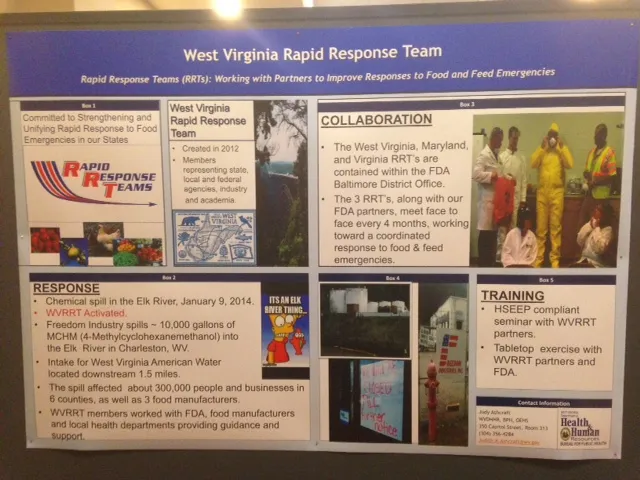
Photo: The U.S. Food and Drug Administration, Public domain, via Wikimedia Commons
The Document Nobody Opens Twice
Somewhere in your organization is a folder — Confluence space, Notion workspace, shared Drive — containing dozens of incident postmortems. They're well-formatted. They have timelines, five-whys diagrams, and action items with owners. They are also, in all likelihood, never opened again after the review meeting ends.
The blameless postmortem is one of the genuinely good ideas modern engineering borrowed from high-reliability industries. The premise is sound: punish honesty and people stop reporting the truth, so remove punishment. But somewhere between the aviation industry and the average mid-size SaaS company, the practice calcified into ritual. We call the result postmortem theater — reviews performed for the appearance of learning rather than the substance of it.
Symptoms of the Theater
Run an honest audit against these signals:
- The same action items appear in multiple postmortems. "Improve alerting on the billing service" showing up three times in a quarter means nobody is closing the loop.
- Action items lack deadlines or, worse, lack owners. An action item assigned to "the platform team eventually" is a wish, not a task.
- The timeline is detailed; the causal analysis is shallow. If every root cause is "human error" or "a misconfiguration," the review stopped at the person who pulled the trigger and never asked why the gun was loaded.
- Reviews happen days or weeks after the incident, when memory has softened and urgency has evaporated.
- Nothing is measured. If you can't say whether recurrence of a given failure class went up or down after a review, you can't claim the review worked.
If three or more of these describe your process, you're generating paperwork, not resilience.
Why Good Rituals Decay
Blamelessness decays for predictable reasons. First, volume: when teams run enough incidents, each review competes with shipping work, and the path of least resistance is a template. Second, incentive misalignment: leadership asks "do we have a postmortem?" rather than "did anything change?" — so teams optimize for document production. Third, blamelessness without follow-through quietly becomes blamelessness without accountability. Nobody gets punished, but nobody gets resources to fix anything either.
The original insight still holds: psychological safety is a prerequisite for learning. What's missing is the second half — learning requires mechanism, not just meetings.
A Leaner Alternative
Not every incident deserves a full review. Consider a tiered approach:
- Tier 1 — Quick debrief (15 minutes, same day). For low-severity incidents. What happened, what did we learn, is there a one-line fix? Recorded in a lightweight log, not a formal document.
- Tier 2 — Standard review (45 minutes, within 48 hours). For anything customer-visible. Timeline, contributing factors, and — critically — action items with owners, deadlines, and a ticket in the actual backlog, not a bullet point in a doc.
- Tier 3 — Deep review. Reserved for severe or recurring incidents. This is where five-whys and systemic analysis belong, not applied reflexively to every hiccup.
Then add the component almost everyone skips: a recurrence check. Thirty days after every Tier 2 and Tier 3 review, someone asks one question — did the action items ship, and has this failure mode reappeared? That single habit converts postmortems from documents into a control loop.
Measuring Whether Learning Is Happening
A handful of signals tell you more than any process audit:
- Action item completion rate within 60 days of the review.
- Repeat-incident rate for the same failure class, tracked over quarters.
- Time from incident to review — learning decays fast.
- Reporting honesty. If near-misses and embarrassing details are showing up in reviews, your blameless culture is real. If every postmortem reads like a press release, it isn't.
Keep the Values, Drop the Ceremony
The goal was never beautiful documents. It was an organization that gets structurally harder to break over time. Blameless culture is worth defending — but defend it by making reviews short, actioned, and audited, not by mandating a template. If your postmortem process can't point to outages it prevented, it's performance art. Close the folder and build the loop instead.