Runbook Decay: Why Your Incident Documentation Is Working Against You
Photo: Internet Archive Book Images, No restrictions, via Wikimedia Commons
There is a particular kind of dread that sets in at 2:00 a.m. when an on-call engineer opens a runbook and finds instructions that reference a service decommissioned eight months ago. The monitoring system fired correctly. The alert routed properly. But the documentation meant to guide the response has quietly become fiction.
This phenomenon—sometimes called runbook rot—is one of the most underappreciated failure modes in modern incident response. Teams invest heavily in observability platforms, alerting thresholds, and on-call rotations, yet treat the documentation that bridges detection and resolution as a one-time deliverable. The result is a growing gap between the system as it exists and the system as it is described.
Why Runbooks Degrade So Quickly
Runbook decay is not primarily a discipline problem. It is a structural one. Documentation is typically authored during or immediately after a system's initial deployment, when engineers have the clearest mental model of its behavior. From that point forward, the system evolves through infrastructure changes, dependency updates, configuration drift, and architectural refactors—while the runbook remains static.
In high-velocity engineering organizations, a runbook written during a Q1 sprint may be functionally obsolete by Q3. Service endpoints change. Environment variables get renamed. The escalation path documented in the runbook reflects an org chart that no longer exists. Each of these changes is individually minor, but collectively they transform a trusted reference into a liability.
On-call engineers who have worked with degraded runbooks describe a specific cognitive burden: the effort required to mentally reconcile what the documentation says with what they know to be true from experience. That reconciliation takes time—time that is costly during active incidents. More dangerously, engineers who are newer to the system have no baseline from which to evaluate the accuracy of what they are reading.
The Metrics That Reveal Documentation Drift
Before a team can address runbook rot, it needs visibility into where decay is occurring. Several operational signals are particularly useful.
Last-modified timestamps are the most basic indicator, but they require context. A runbook untouched for six months may still be accurate if the underlying system has been stable. Conversely, a runbook updated two weeks ago may already be outdated if a major infrastructure migration occurred in the interim.
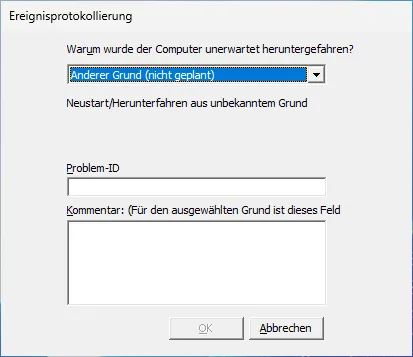
A more reliable signal is incident annotation data. When engineers resolve incidents, they should be prompted to flag whether the runbook they used was accurate, partially accurate, or misleading. Aggregating these annotations over time reveals which runbooks have drifted farthest from reality. Teams that instrument this feedback loop consistently report that a small percentage of runbooks—often those associated with legacy systems or frequently changed services—account for the majority of documented inaccuracies.
Mean time to resolution (MTTR) segmented by runbook is another valuable lens. If incidents associated with a particular service show elevated MTTR despite straightforward alert conditions, outdated documentation is a plausible contributing factor worth investigating.
Version Control as a Foundation, Not a Solution
Storing runbooks in version-controlled repositories—Git being the standard choice for most infrastructure teams—is a necessary baseline. It provides change history, enables peer review through pull requests, and creates accountability around modifications. However, version control alone does not prevent decay; it only makes the history of decay visible.
The teams that maintain the most accurate runbooks tend to treat documentation updates as a first-class engineering task, not an afterthought. Specifically, they enforce a practice of co-locating runbook updates with the infrastructure changes that necessitate them. When a Terraform module is modified, the associated runbook update is part of the same pull request. When a Kubernetes deployment spec changes, the runbook review is part of the definition of done.
This co-location approach requires cultural buy-in and, ideally, tooling that enforces it. Some teams implement lightweight CI checks that flag pull requests touching specific service configurations if no corresponding documentation update is detected. The check does not block deployment—that would create friction disproportionate to the problem—but it surfaces the gap at the moment when an engineer is best positioned to address it.
Automation-First Approaches to Runbook Maintenance
For high-frequency, well-understood failure modes, the most effective runbook is one that executes itself. Automated remediation workflows—whether implemented through tools like AWS Systems Manager Automation, PagerDuty Process Automation, or custom scripts triggered via webhooks—eliminate the human interpretation layer entirely for known scenarios.
This is not a wholesale replacement for human-authored documentation. Complex incidents involving novel failure patterns, cascading dependencies, or ambiguous blast radius require human judgment that no automation can fully substitute. But for the long tail of repetitive, predictable incidents—disk pressure alerts, certificate expiration warnings, service restart sequences—automation removes the runbook accuracy problem by removing the runbook dependency.
Where full automation is not feasible, semi-automated runbooks represent a practical middle ground. These are structured documents that embed executable code snippets, pre-populated command templates, and direct links to the relevant dashboards and configuration files. Rather than describing what to do in prose, they guide the engineer through a sequence of executable steps, reducing the interpretation overhead and making deviations from expected behavior immediately apparent.
Building a Runbook Review Cadence That Survives Operational Pressure
Scheduled review cycles for runbooks are frequently proposed and rarely sustained. Quarterly documentation audits tend to collapse under the weight of competing priorities, particularly in organizations where engineering time is constrained.
A more durable approach ties review triggers to operational events rather than calendar dates. Runbooks should be reviewed after every incident in which they were used, as part of the post-incident review process. They should be reviewed when the system they document undergoes significant change. And they should be reviewed when ownership of a service transfers between teams.
This event-driven model distributes the review burden across natural operational touchpoints rather than concentrating it in periodic audits that are easy to defer. It also ensures that the engineers reviewing the runbook are those with the most current knowledge of the system's behavior.
Runbook Quality as an Operational Discipline
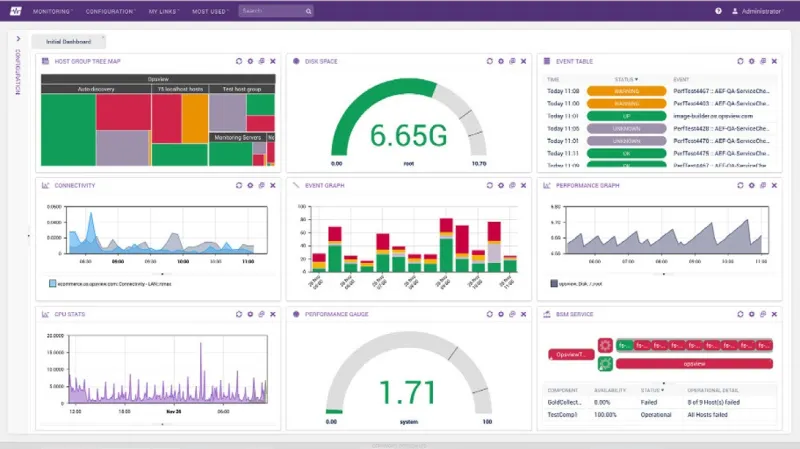
The monitoring stack that detects an incident and the documentation that guides the response are two halves of the same operational capability. Organizations that invest heavily in one while neglecting the other are accepting a structural vulnerability in their incident response posture.
Runbook rot is not inevitable. It is the predictable outcome of treating documentation as a static artifact in a dynamic system. Addressing it requires treating runbook quality with the same rigor applied to alert thresholds, on-call schedules, and infrastructure reliability—because when the alert fires at 2:00 a.m., the quality of the response depends on both.